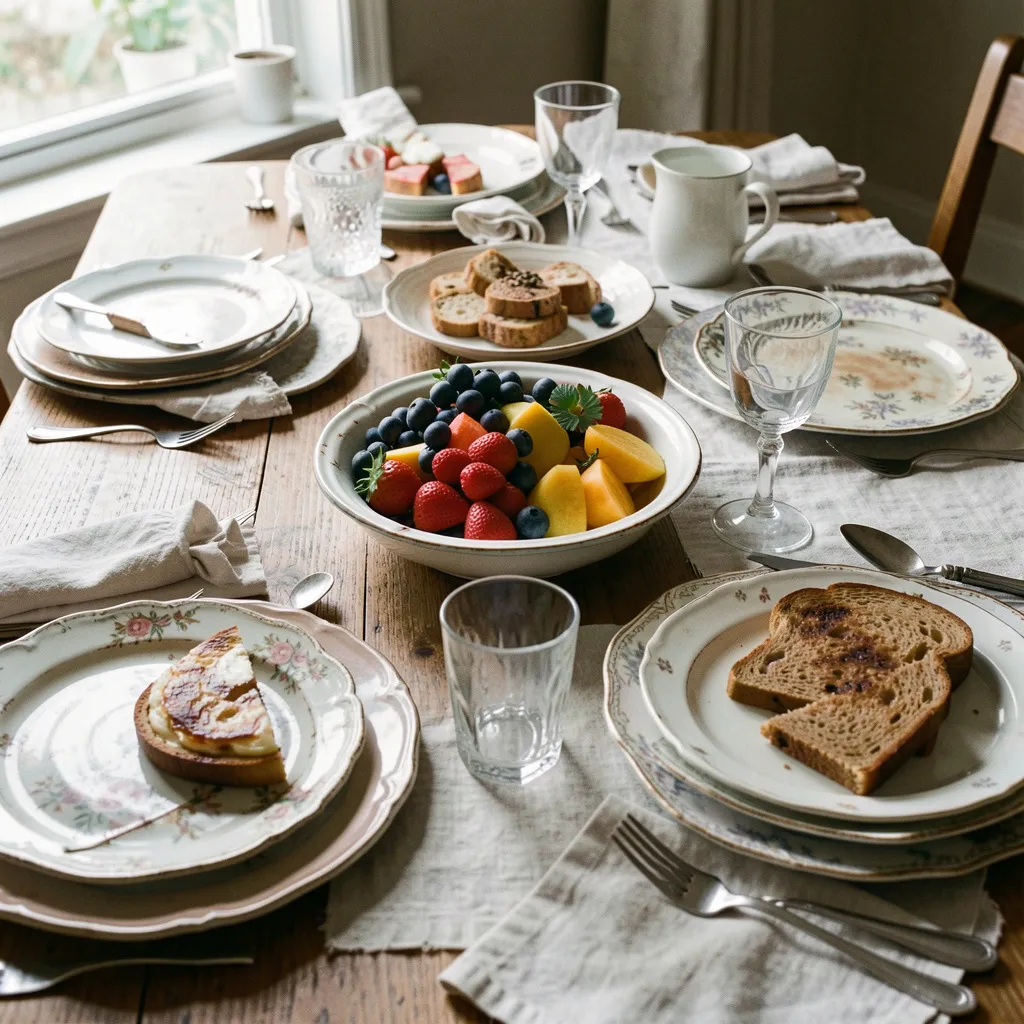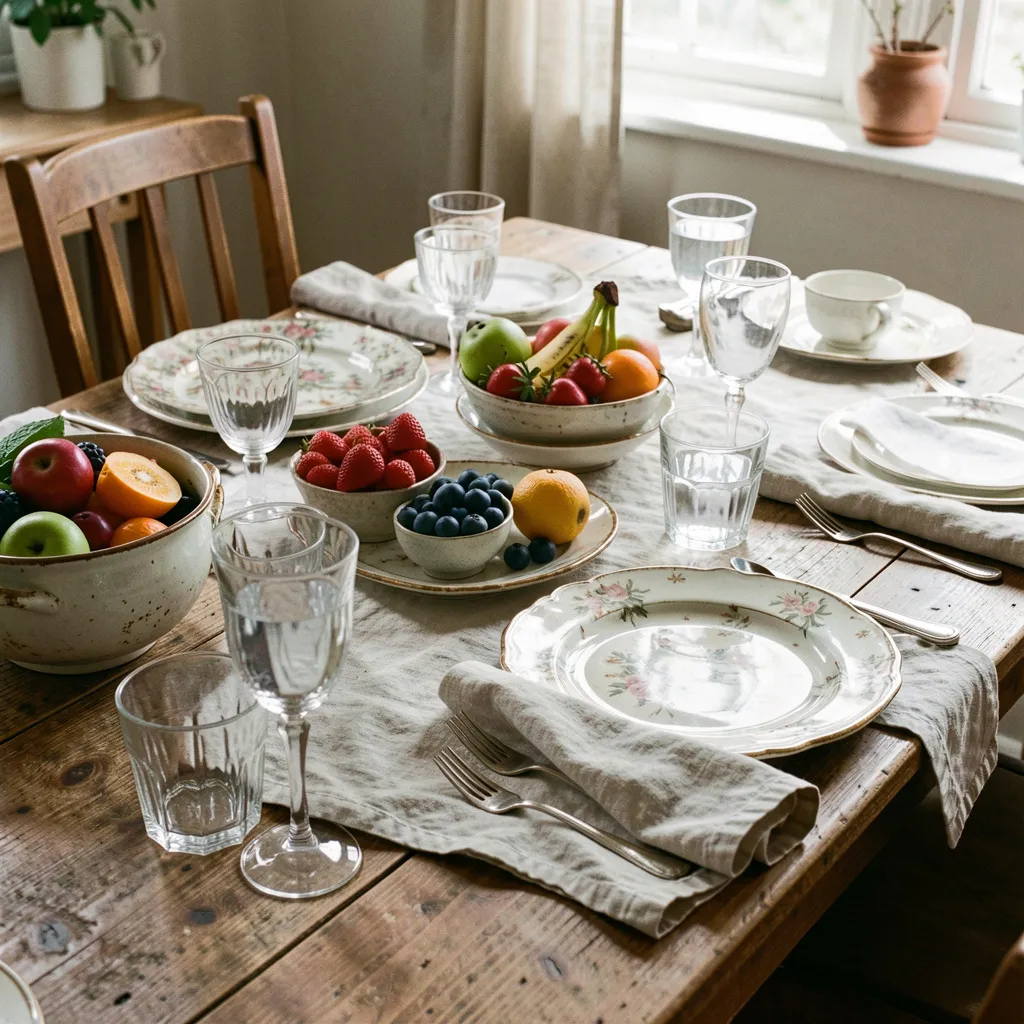
Detailed table setting composition

Anatomy of a Setting

Understanding the principles that guide elegant tabletop composition, from spatial relationships to visual balance.

Formal Versus Informal Spacing

Spacing between place settings varies according to the formality of the occasion. Formal settings typically allow more generous spacing, providing each guest with ample personal space and room for multiple courses.

Informal settings can accommodate closer placement, creating a more intimate atmosphere. The key is maintaining consistency throughout the table while ensuring guests can move comfortably without feeling cramped.

We consider factors such as table size, number of guests, and the nature of the event when determining appropriate spacing. The goal is always to balance aesthetic appeal with practical functionality.


Formal table spacing arrangement

Height and Sightlines

Maintaining clear sightlines between guests is essential for successful gatherings. Centerpieces and decorative elements must be positioned to allow conversation and eye contact across the table.

We typically keep centerpiece height below eye level when seated, or use low, wide arrangements that don't obstruct views. Taller elements are placed at table ends or used sparingly in arrangements that allow visual gaps.

The relationship between height and width creates visual rhythm. Lower, wider arrangements can anchor the table's center, while taller elements provide vertical interest without compromising functionality.

Table setting with proper height balance

Material Harmony

Successful table settings achieve harmony through thoughtful material selection. Different textures and finishes should complement rather than compete with each other.

We consider how matte and glossy surfaces interact, how natural and refined materials balance, and how color temperature affects the overall mood. A table might combine smooth ceramics with textured linens, or polished glass with matte metal, creating visual interest through contrast.

The goal is creating a cohesive composition where each element feels intentional and contributes to the whole. Material choices should support the aesthetic direction while maintaining practical considerations such as durability and ease of maintenance.

Practical Application

These principles serve as guidelines rather than rigid rules. Each event presents unique opportunities to adapt and innovate while maintaining fundamental considerations of function and aesthetics.

During our consultation process, we discuss how these principles might apply to your specific event. We consider your table dimensions, guest count, and aesthetic preferences to create a composition that feels both intentional and natural.

To learn more about how we apply these principles in practice, or to discuss your upcoming event, please contact us for a consultation.

Schedule Consultation